Factoring in usage scenarios and application-specific requirements can provide valuable insights into whether slip rings or clock springs should be utilized.
Slip rings are typically favored in applications necessitating continuous 360-degree rotation. Examples include wind turbines, where slip rings enable the transfer of power and data from the stationary base to the perpetually rotating blades. In radar equipment and satellite equipment, slip rings cater to the constant rotation while maintaining reliable data and power transmission.
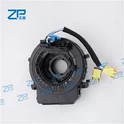
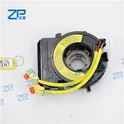
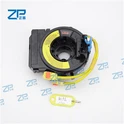
On the opposite side, clock springs are mechanisms of choice where limited rotation is required, combined with the need for compactness. An example is the steering wheel of a vehicle. The clock spring connects the stationary parts of the vehicle, such as the column or dashboard, with electrical features on the steering wheel like the airbag, horn, or audio system controls, adapting to the turning of the wheel.
Digging into industry-specific examples, aerospace applications, known for stringent weight, reliability, and space constraints, could favor either component depending on the specific requirement. A slip ring might be preferred for data and power transfers in rotational radar systems, while a clock spring could be used in pilot controls.
In the realm of renewable energy, especially wind turbines, slip rings find extensive use due to their ability to accommodate the constant, unrestricted rotation of the blades while ensuring efficient power and signal transmission.
Automotive systems, with requirements for both limited and continuous rotation, utilize both components. Slip rings could be found in electric motors of hybrid vehicles, while clock springs are a mainstay within steering wheel assemblies.
For medical equipment, compact imaging devices may favor the use of clock springs due to their compactness and lower maintenance needs, while larger diagnostic devices like CT scanners benefit from slip rings for unrestricted rotation and reliable power and signal transfers.
Understanding the strengths and limitations of slip rings and clock springs within context- and industry-specific scenarios allows for a more nuanced selection process. Both have unique sets of advantages that make them better suited to different types of applications, yet their effectiveness is always contingent upon the precise requirements of the system in which they are implemented.