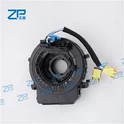
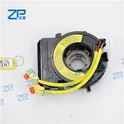
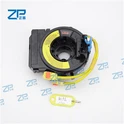
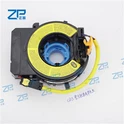
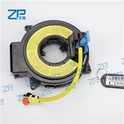
When deciding between these two electrical components, various factors must be deliberated. Thus, offering comprehensive guidance on choosing between slip rings and clock springs relies on a balanced consideration of multiple elements, including compatibility, system requirements, cost, maintenance needs, durability, and specific application requirements.
First, consider the nature and demands of your specific application, which will largely influence your selection. If dealing with a system requiring unrestricted, continuous rotation and complex circuits or power transmission, a slip ring may be the more suitable choice. Conversely, for devices necessitating a more compact size, lower maintenance, and more limited rotation, a clock spring would likely be more fitting.
Compatibility with the existing system plays a crucial role. The component needs to seamlessly integrate with the system, ensuring smooth signal or power transmission. Special attention should be given to the mounting type, size, and ability to handle the required number of circuits.
The cost, both initial and long-term should also be analyzed. While the initial costs of slip rings and clock springs might be comparable depending largely on the specifications, the life-cycle cost, including maintenance and replacement, could tip the scale in favor of one over the other.
Durability is reflected in the component's ability to withstand the environment and lifecycle. If your application has to function in harsh or demanding conditions, choosing a component made of robust materials to resist conditions such as high temperatures or humidity is essential.
To illustrate, in wind turbines, the continuous rotation and toughness of the environment may tilt the balance in favor of slip rings, despite potential higher maintenance costs. In the medical industry, where maintenance could disrupt crucial services, the lower maintenance demands of clock springs in medical imaging devices could prove beneficial. In aerospace and automotive industries, the selection would greatly depend on the specific system-steering systems favoring clock springs, while radar systems or electric motors would benefit from slip rings.
By meticulously understanding these selection criteria and interrelating them with the system's requirements and constraints, users can optimize their selection process, leading to improved system performance, reliability, and longevity.