


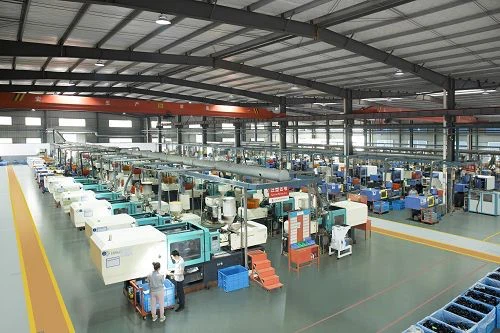
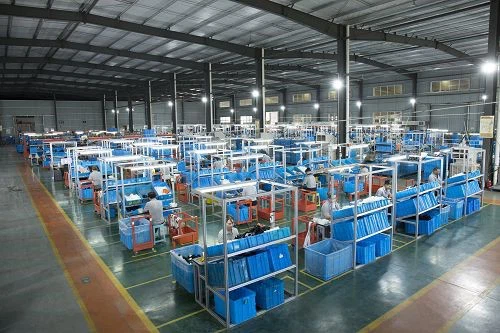
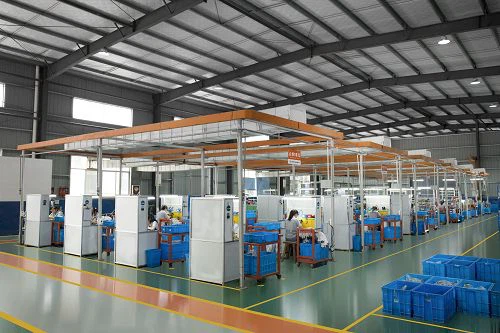
The company is located in the Automobile and Motorcycle Distribution Park in Huang jin bu Town, yu gan county, Jiangxi Province Adjacent to ying tan North Station, the traffic is very convenient. Covering an area of more than 35,000 square meters, it has a first-class sales team,advanced production lines and testing equipment, exquisite product research and development technology and modern management team.
Since its establish in 2007, Zhengpu Company has always adhered to the principle of "people-oriented, customer first,forge ahead and create brilliance together", adhering to the business philosophy of "scientific management, quality first and brand development", and relying on advanced production equipment and strong technical force, it has implemented lean production management and ERP management system. So that the "Zhengpu" series products are extraordinary and refined and are favored and praised by consumers at home and abroad.
The "honest people" who "unite and struggle, forget ahead, keep their promises and never give up" have made great achievements after more than ten years of hard work and hard work.
Why choose us
Advanced equipment
Jiangxi factory was put into use,covering an area of 35000 square meters ,the annual output value exceeded 100 million yuan in 2019 year.
Professional team
The function of the airbag spring is to connect the airbag, ensuring that current can still enter when the steering wheel is turned.
Quality control
So that the "Zhengpu" series products are extraordinary and refined and are favored and praised by consumers at home and abroad.
Rich experience
The company moved to luofeng industrial zone, cover an area of 10000 square meters,the annual output value reaches 40 million yuan in 2016 year.
Competitive price
Since its establish in 2007, Zhengpu Company has always adhered to the principle of "people-oriented, customer first, forge ahead and create brilliance togeth.
Custom service
And the inner thread has a hairspring, which will not break due to frequent rotation of the steering wheel. Ensure that the airbags are always in working conditi.


Product Categories
Latest Products
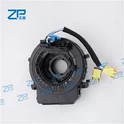


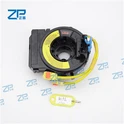

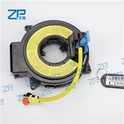
The clock spring, a marvel of engineering, sits unassumingly within the steering column of virtually every modern automobile. Its primary function is as elegant as it is essential: to maintain a continuous electrical connection between the vehicle’s steering wheel and its electrical systems. This allows for the seamless operation of various steering wheel-mounted controls – think airbags, audio controls, cruise control, and the horn – even as the wheel turns.


The primary function of a clock spring is to provide a continuous electrical connection while allowing the steering wheel to be turned freely. This allows the various controls on the steering wheel, including the horn, to operate even when the wheel is turned.
The role of the clock spring is crucial for the proper functioning of the vehicle's electrical system. Without it, the electrical connection would be severed when the steering wheel is rotated, making it impossible to use the horn, airbag, or other steering wheel controls. Therefore, a properly functioning clock spring is vital for the safety and functionality of the vehicle.
Spiral springs
Named for their coiled, spiral shape, these springs efficiently store and release mechanical energy. The spiral design is crucial for compactness and the consistent release of energy, making them ideal for devices requiring a smooth operation over time.
Power springs
This term emphasizes the spring’s role in storing significant amounts of energy that can be released to power a mechanism. Power springs are fundamental in applications where a controlled and sustained release of energy is necessary for the operation, such as in mechanical watches or retractable devices.
Mainsprings
Specifically used within the context of timekeeping devices like watches and clocks, mainsprings denote the primary spring responsible for driving the mechanism. Their ability to store and methodically release energy makes accurate timekeeping possible, showcasing the precision engineering of these components.
Motor springs
Highlighting their application in providing motive force, motor springs are used in various mechanical devices to impart movement or energy. These springs are integral to the functioning of motors and other mechanical assemblies where a reliable source of energy is critical for operation.
Coil springs
A broad term that refers to the spring’s coiled configuration. Coil springs can be designed to meet a wide range of mechanical needs, from absorbing shock to maintaining force or tension within a mechanism. Their versatility makes them suitable for countless applications across different industries.
Torsion springs
This name is given to springs that operate on the principle of torsion or twisting. They exert a torque or rotational force when twisted, ideal for applications requiring rotational motion such as levers, doors, and other mechanisms that pivot or turn.
Flat springs
These are described by their flat, thin strip of metal wound into a coil, focusing on the spring’s slim profile and the specific applications where space efficiency and compact design are necessary. Flat springs offer a unique solution for space-constrained environments while still providing the necessary force or tension.
Clock springs consist of a flat coil strip and are wound, either tightly or openly, similar to a snail shell in that each coil is nested within a larger coil. Flat coil strips provide a stronger spring than round wire, although round wire is more commonly used in springs. Often, clock springs are wound and mounted on an arbor, which is a piece of round stock that has one end formed to accept the inside end of the clock spring, while the outside end is attached to a stationary post. The power spring is also housed within a cylindrical casing, or barrel. The clock spring is wound by turning the arbor, but it drives the object’s movement by the barrel; this arrangement allows the clock spring to continue powering the object while it is being wound. Winding the object turns the arbor, which tightens the clock spring, wrapping it closer around the arbor. Clock springs are most commonly formed through the cold rolling process. A type of roll forming, cold rolling utilizes roll forming machines, which consist of sequences of calendars, or roller die pairs, positioned both above and below the metal coil that is being formed. As the metal moves through the machine, the rollers bend the material along the linear axis, pressing the metal into a more uniform grain flow while shaping the metal into flat coil strips. Cold rolled clock springs are created at temperatures below the recrystallization point of the metal. The cold rolling process increases the tensile strength of the metal. The clock springs are then annealed or made softer through heating to be wound or coiled. Next, the clock spring is heat treated in order to reduce stresses and fractures and thus further strengthen the spring.
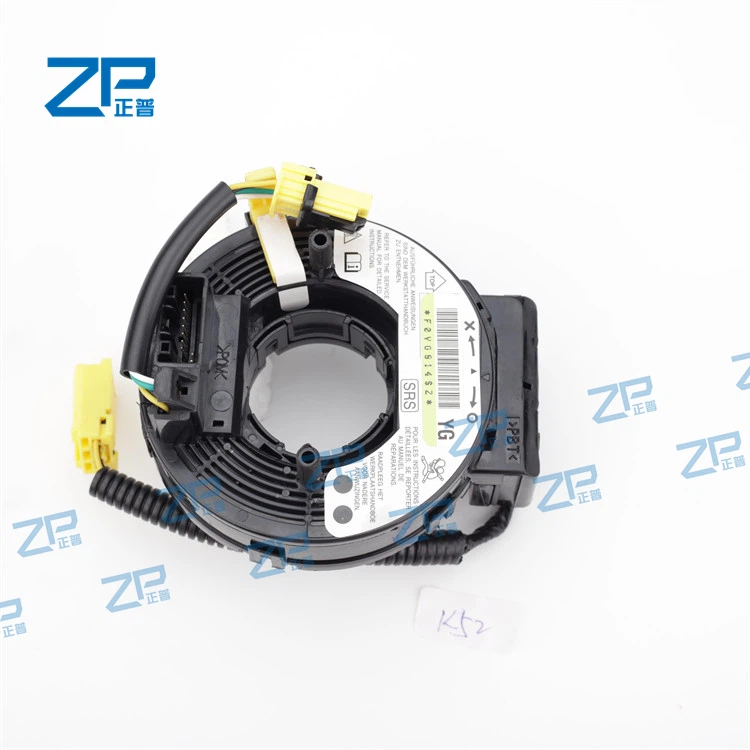
The differences between slip rings and clock springs extend beyond mechanical design, greatly impacting their performance, reliability, and long-term suitability in various applications. To ensure the optimal function of a system, understanding these distinctions is fundamental for users.
Starting with performance, the signal transmission quality of a slip ring or clock spring is a pivotal factor. While both components enable the transfer of electrical signals, each may handle variations in signal types differently, possibly resulting in disparity in data transmission rates. For instance, certain slip rings might be better suited to transmitting power but might struggle with high-speed data or sensitive signals. Conversely, some clock springs may excel at steady, low-power signal transmission.
Power ratings and operating speeds are also dependent on the specific designs and materials used. Given their robust construction, slip rings can manage higher power transmission and can tolerate high-speed rotations. Clock springs, although adept at handling varying rotation speeds, might have limitations when it comes to handling high-stress, high-power applications.
The service lifespan and maintenance requirements of both components are critical for assessing their long-term performance. Slip rings, subjected to increased wear due to their dynamic form of contact, might necessitate regular maintenance for brush and ring replacements. Conversely, clock springs, with their flexible and less-friction-based contact design, tend to have lower wear rates and reduced maintenance needs.
Delving into reliability and durability, both components have robust designs to withstand consistent use. However, factors such as the harshness of the operating environment, the quality of materials used, the precision of assembly, and the design of the component can influence their wear resistance and long-term performance.
By thoroughly understanding these performance and reliability differences, users can select the most suitable component for their systems, maximizing efficiency and optimizing longevity. These variations underline the importance of selecting a component that comprehensively aligns with the specific operational needs and constraints of the application in question.
How Clock Spring For Toyota Works
Imagine a steering wheel filled with buttons for the horn, cruise control, and more. If the wires that connect these buttons to the rest of the car's systems were rigid, they'd quickly get tangled up when you turn the wheel. This is where the clockspring comes in. It's like a smart coil of wire that can twist and turn without getting all knotted. Picture a flexible bridge that lets information travel between two moving parts without breaking.
The clockspring is usually located behind the steering wheel. It's made up of a coil of special wires that are designed to stretch and twist. These wires are connected to the buttons and controls on the steering wheel and to other vital systems like the airbag and the car's computer.
When you turn the steering wheel, the clockspring's coiled wires unwind and stretch. This allows the cables to move with the wheel's turning without getting tangled. As you straighten the wheel back, the clockspring coils up again, making sure the wires stay connected and can send signals back and forth. The genius lies in its ability to provide a continuous connection between the steering wheel and the rest of the car. This means that even when you turn the wheel multiple times, the wires inside the clockspring remain connected and can keep sending information without interruptions.
Besides allowing buttons and controls to work while the steering wheel turns, the clockspring also plays a vital role in the functioning of the airbag. In case of an accident, the airbag needs to inflate quickly. The clockspring ensures that the signals to deploy the airbag can still reach it, no matter the steering wheel's position.
The car clockspring might seem like a small and hidden part of your vehicle, but its contribution to the functionality and safety of your car is immense. The clockspring ensures you can control your car and access its functions smoothly. So, the next time you turn the steering wheel, you'll know there's a little coil of magic making it all possible!
How to Install Clock Spring For Toyota
Remove the steering column shroud
One of the first and most important steps is to disconnect the negative (black) battery cable and wait 15 minutes before proceeding. This allows the airbag system capacitor to discharge, which will prevent any "surprises" from happening once you start messing with the airbag components. Use a T20 driver to remove the screws from the bottom of the steering column shroud and pull the shroud off.
Remove the airbag module
To remove the airbag module, you must release three clips that hold it in place on the back of the module. The easiest way to do this is to turn the steering wheel so that the opening on the wheel is positioned above that particular clip. Use a flat head screwdriver or dental pick to release the three clips and pull the module out. Disconnect the two electrical connectors on the back of the module and remove it.
Remove the clockspring
Remove the electrical connectors for the cruise control and the clockspring. Remove the 13mm steering wheel bolt and pull the steering wheel off. Remove the three T20 screws that hold the clockspring in place and disconnect the electrical connectors going into it. Remove the windshield wiper stalk and the turn signal stalk from the clockspring with a Phillips screwdriver. Discard the old clockspring.
Install the new clockspring
Install the turn signal stalk and the windshield wiper stalk on the new clockspring. Set the new clockspring in place and reinstall the three screws. Reinstall the steering wheel and pull the yellow protector on the new clockspring out. Reinstall the two electrical connectors and the steering wheel bolt, which should be torqued to 40 lb/ft if you have a torque wrench. Reconnect the airbag electrical connectors and push the airbag module back in place until you hear the clips snap together. Reconnect the negative battery cable.
Symptoms of a Failing Clock Spring For Toyota
Much like the subtle discomfort preceding a fever, a failing clock spring often begins murmuring its grievances before full-on failure ensues. These murmurs can manifest as:
●Erratic steering wheel controls: Imagine cruising down the road and reaching to change the radio station, except that nothing happens. Or, you press the horn, and it responds with silence. These interruptions in functionality can be the early whisperings of a clock spring bidding farewell.
●The airbag warning light: This dashboard sentry, when illuminated, is your car’s way of waving a red flag. Don’t dismiss this as a minor glitch; it’s often the clock spring reporting a breach in the airbag circuitry, potentially disabling the airbag system.
●Peculiar noises: Your steering wheel shouldn’t be a source of squeaks, clicks, or snapping sounds. When it is, you might be hearing the clock spring’s cry for help as it grapples with unwelcome friction or a disrupted ribbon cable within.
When these symptoms emerge, it’s not just the convenience of steering wheel functions that’s compromised. Take the airbag warning light, for example. A real-world case study involved a driver in a minor collision. The impact was not unlike countless others that occur daily, except, in this instance, the driver’s airbag failed to deploy. The culprit, upon inspection, was identified as a faulty clock spring, which had severed the critical connection moments before the accident.
This example illustrates a dire truth: A failing clock spring can be more than an annoyance — it can undermine the vehicle’s safety mechanisms. An impaired airbag system may not offer its life-protecting cushion just when you need it most. Furthermore, distractions from malfunctioning controls can lead to driver inattention at critical moments, adding to the safety risks.
As a vehicle owner or technician, recognizing these symptoms as the clock spring’s cry for help can prompt timely intervention. Early diagnosis and repair not only restore functionality and convenience but, far more importantly, they ensure the reliability of safety features that protect lives on the road.
Since its establish in 2007, Zhengpu Company has always adhered to the principle of "people-oriented, customer first,forge ahead and create brilliance together", adhering to the business philosophy of "scientific management, quality first and brand development", and relying on advanced production equipment and strong technical force, it has implemented lean production management and ERP management system. So that the "Zhengpu" series products are extraordinary and refined and are favored and praised by consumers at home and abroad.


FAQ
As one of the leading clock spring for toyota manufacturers and suppliers in China, we warmly welcome you to wholesale high-grade clock spring for toyota made in China here from our factory. All auto parts are with high quality and competitive price.
84306-0k020, 84306-33080, 84306-52020