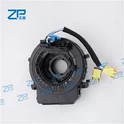
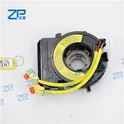
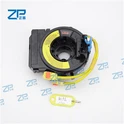
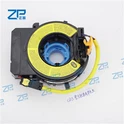
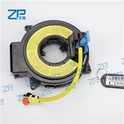
In evaluating the difference between slip rings and clock springs, cost, and environmental resilience become decisive factors. These components, while inherently designed to fulfill similar roles, exhibit differing costs and traits when exposed to certain environmental factors.
The initial investment cost for slip rings and clock springs varies depending on factors such as size, the material used, and the complexity of the design. Generally speaking, both can range from affordable options designed for less demanding applications to premium-priced versions built to withstand harsh conditions and complex signal transmission requirements.
However, when considering cost over time, additional factors such as maintenance and replacement play a crucial role. Slip rings, given their friction-based operation, tend to wear out more quickly and require regular maintenance and eventual replacement of brushes and rings. This could potentially lead to higher long-term costs. On the contrary, clock springs require less maintenance due to their coiling design, leading to an extended service life and potentially lower lifetime costs.
On the environmental front, both components are engineered to resist a range of conditions, including fluctuating temperatures, high humidity, and heavy vibrations. However, the level of resistance depends greatly on the materials used and the quality of the construction.
Slip rings, depending on their design and materials, can withstand a wide range of temperatures and are usually resistant to high levels of vibration, making them suitable for industrial and heavy-duty applications. However, the presence of brushes and the open design in some models could pose challenges in very high humidity or dusty conditions.
In contrast, clock springs with their inherently sealed design offer better resilience to dust and moisture but may have limitations on extreme temperature resistance and vibration depending on the cable and casing materials used.
To sum up, a careful analysis of the long-term costs and environmental resilience of slip rings and clock springs can guide users to a more informed decision, ensuring they select the component best suited to their specific needs and application conditions.