


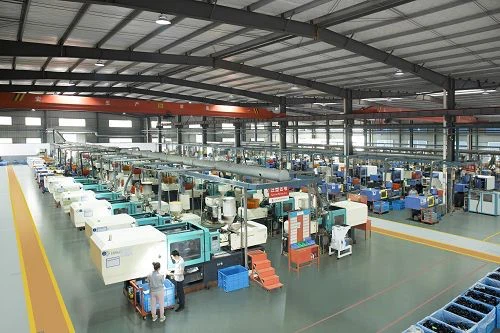
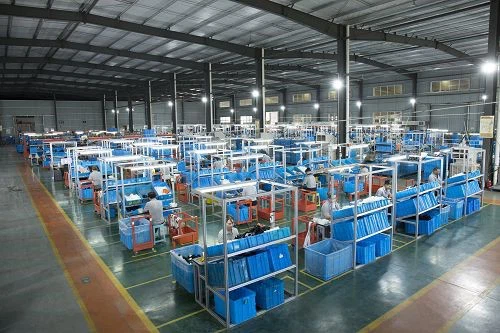
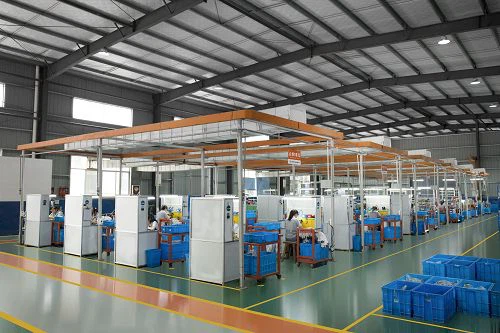
The company is located in the Automobile and Motorcycle Distribution Park in Huang jin bu Town, yu gan county, Jiangxi Province Adjacent to ying tan North Station, the traffic is very convenient. Covering an area of more than 35,000 square meters, it has a first-class sales team,advanced production lines and testing equipment, exquisite product research and development technology and modern management team.
Since its establish in 2007, Zhengpu Company has always adhered to the principle of "people-oriented, customer first,forge ahead and create brilliance together", adhering to the business philosophy of "scientific management, quality first and brand development", and relying on advanced production equipment and strong technical force, it has implemented lean production management and ERP management system. So that the "Zhengpu" series products are extraordinary and refined and are favored and praised by consumers at home and abroad.
The "honest people" who "unite and struggle, forget ahead, keep their promises and never give up" have made great achievements after more than ten years of hard work and hard work.
Why choose us
Advanced equipment
Jiangxi factory was put into use,covering an area of 35000 square meters ,the annual output value exceeded 100 million yuan in 2019 year.
Professional team
The function of the airbag spring is to connect the airbag, ensuring that current can still enter when the steering wheel is turned.
Quality control
So that the "Zhengpu" series products are extraordinary and refined and are favored and praised by consumers at home and abroad.
Rich experience
The company moved to luofeng industrial zone, cover an area of 10000 square meters,the annual output value reaches 40 million yuan in 2016 year.
Competitive price
Since its establish in 2007, Zhengpu Company has always adhered to the principle of "people-oriented, customer first, forge ahead and create brilliance togeth.
Custom service
And the inner thread has a hairspring, which will not break due to frequent rotation of the steering wheel. Ensure that the airbags are always in working conditi.


Product Categories
Latest Products
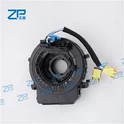
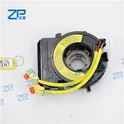

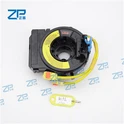

A clockspring (also referred to as spiral spring or spiral cable) is a type of spring often found in automobiles, that stores energy on a rotating axis. Clocksprings generally consist of a flat multicore cable wound in a spiral shape similar to a clock spring, hence the name, but the name is also given to devices fulfilling the same purpose but which use spring-loaded brushes contacting concentric slip rings.


Installation without interrupting or reducing pipe operations!
No heavy machinery or specialized equipment for installation
Not requirement of welding or cutting
Quick installation and a complete cure within 2 hours after application
Fully corrosion-resistant system prevents further corrosion and growth of a treated defect
Suitable for all environments and weather conditions
Suitable solutions and applications for the repair of broken parts of the shaped pipe (bends, reducers, T's, etc.)
Laminated leaf springs
A multi-leaf spring is commonly used for truck and railway wagon suspension. It comprises a sequence of flat plates, most semi-elliptical in shape. The flat plates are known as spring leaves. The upper leaf provides a maximum length. A master leaf is the longest leaf at the top. The lengths of the leaves vary. However, the length reduces steadily from top to bottom leaf. The spring eye is formed by bending it at both ends. Then, two bolts are placed through these eyes to secure the leaf spring to the automobile body. Two U-bolts and a center clip secure the leaves together.
Rebound clips are used to hold leaves in alignment and to prevent lateral leaf displacement during operation. The axle supports the leaf spring in the center. In addition to the master leaf, multi-leaf springs have one or two more whole leaves. Between the master leaf and the graduated-length leaves, the extra full-length leaves are stacked. Extra full-length leaves are added to withstand the transverse shear strain.
Torsion springs
This spring's construction is similar to that of a compression or tension spring, except that the ends are fashioned, so the spring is loaded by a torque about the coils' axis.
The spring, for example, delivers bending stresses caused by the bending moment in the spring wire. A torsion spring is deceptive because the wire is subjected to bending pressures rather than torsional shear stresses, as in helical torsion or tension springs.
Volute and conical springs
Conical and volute springs are utilized in particular situations where a telescoping spring or a spring with an increasing spring rate (load required per unit deflection) is sought. The conical spring has a uniform pitch, but the spiral springs have a paraboloid shape with constant pitch and lead angles. This design is occasionally used in vibration difficulties where springs support a body with changing mass.
Helical springs
The helical spring is formed of a wire with a circular cross-section bent into the shape of a helix. Both torsion and tension designs exist. Although they sound similar, tension springs and torsion springs are really different. Torsion springs revolve and tension springs fully expand and compress. For instance, torsion springs on a garage door will extend less than a tension spring.
The spring is compressed to put it another way. The external force tends to extend the spring in a helical tension spring. In other words, the spring is elongated. Although the spring is compressed, the wire of the helical compression spring is not subjected to compressive stress. Furthermore, even though the spring is under tension, the wire of the helical tension spring is not subjected to tensile stress. Compression and tension refer to the entire spring, not the stresses in the spring wire.
Clock springs are typically made of high-quality steel that exhibits excellent mechanical properties. The choice of material depends on the specific application and the desired characteristics of the spring. Clock spring steel is known for its high tensile strength, corrosion resistance, and fatigue resistance. Other materials, such as titanium alloys or nickel-based alloys, may be used for specialized applications that require unique properties. Clock spring specialists have a deep understanding of these materials and can guide you in selecting the most suitable option for your needs.

Application of Clock Spring
Safely connect cables between the steering wheel and steering column
Because the cables for the cruise control, airbag system, horn, and other functions are often found on a steering wheel, something has to connect those cables from the steering column to the steering wheel. If you were to connect the cables directly to the steering wheel, those cables would break every time the steering wheel turns,
Having the cables connected to the steering wheel through the clock spring allows the steering wheel to turn without causing damage to the wires.
Enables the horn to function
You should never drive without certain things, and a working horn is one of them. Because the clock spring is responsible for transmitting signals from the steering wheel buttons to the car’s computer, it is the part that allows you to beep the horn.
Enables the airbag
While the horn is one of the essential parts of any vehicle for safety reasons, the airbag is equally essential, and a clock spring allows an airbag to deploy. Because the clock spring transmits signals from the steering wheel to the car computer, if it ever breaks, the computer will not know to deploy the airbag when the situation calls for it.
Allows the steering wheel to turn smoothly
A clock spring does not directly affect the actual turning of a steering wheel to a serious degree, but it does still play a factor. If a clock spring is going bad or breaks, you will sometimes experience a rubbing or clicking sound when you turn the steering wheel. In rare cases, turning the steering wheel may not feel as smooth as it should if the clock spring breaks.
Sends signal to the throttle position sensor
The throttle position sensor is responsible for maintaining the appropriate amount of airflow to the engine’s intake manifold by checking the throttle valve. A clock spring plays a role in this process, and if it goes bad, there is a chance that it will send electrical spikes to the throttle position sensor and cause problems.
How to Replace Your Vehicle's Clock Spring
Steps to removing the clock spring
Disconnect the battery: The very first thing you need to do is disconnect the negative charge from the car battery. Once you have done this, wait about 5-10 minutes for the charge to leave the airbag system so that you don’t risk getting electrocuted. If you want to check to make sure that the charge has left the vehicle, you can try to turn on the lights to see if they are still getting power.
Lock the steering wheel: Straighten the steering wheel and then turn the ignition to the LOCK position. This will ensure that the steering wheel stays in the correct position until you are done.
Remove the clock spring: There are a variety of things that will need to be disconnected or removed depending on your vehicle’s specific make, model, and year. For most vehicles, the steps to remove the clock spring are as follows:
Remove steering wheel bolt cover clips
Remove SRS airbag control module bolts
Remove the SRS airbag control module from the steering wheel (make sure you disconnect any electrical connectors)
Remove the nut that is connecting the steering wheel to the column
Now you can remove the steering wheel from the steering column
Once the steering wheel has been removed, you can remove the clock spring
Steps to reinstall the clock spring
Lock the steering wheel: Straighten the steering wheel and then turn the ignition to the LOCK position. This will ensure that the steering wheel stays in the correct position until you are done.
Turn the clock spring: Take the repaired clock spring and carefully turn it clockwise until it stops. Then turn the clock spring counterclockwise approximately 2.75 times.
Align: Center the clock spring so that the mark on the clock spring is aligned with the mark on the outer housing.
Install the clock spring: This process will be similar to what you did when you removed the clock spring, only in reverse. You will need to install or reconnect the following things:
Steering wheel and the nut that connects the steering wheel to the column
Make sure you reconnect the electrical connectors
Reconnect the steering wheel module clips
Put the bolt cover clips back over the bolts on each side of the steering wheel.
Now you should be able to reconnect the battery.
The Lifespan of a Clock Spring: When to Replace
What is the average service life of a clock spring
The service life of a clock spring can be as varied as the devices it inhabits. Typically, in automotive applications, a clock spring can last between 80,000 to 150,000 miles or about 10 years, assuming normal conditions of use. In the realm of timepieces, especially those of high quality, a clock spring could go decades without needing a replacement, thanks to the meticulous design and the protective environment of the watch casing.
However, it’s essential to recognize that these figures are averages. The actual lifespan of a clock spring depends on numerous factors, including the quality of the material, the environment in which the device operates, and the frequency and manner of use.
Factors influencing the lifespan of a clock spring
Several factors can significantly impact the durability and overall lifespan of a clock spring. Understanding these can help users and technicians alike to anticipate potential issues and take preventive measures.
Material quality:High-grade steel or specialized alloys used in premium clock springs can withstand more cycles and harsher environments than their lower-quality counterparts.
Environmental conditions: Exposure to extreme temperatures, humidity, dust, or corrosive substances can accelerate wear and tear on a clock spring.
Usage patterns: Frequent, heavy use or exposure to shocks and vibrations can reduce the lifespan of a clock spring. For instance, a clock spring in a car’s steering mechanism may wear out faster in vehicles frequently driven on rough roads.
Maintenance and handling: Regular maintenance and careful handling can prolong a clock spring’s life. Conversely, neglect and rough handling can lead to premature failure.
Real-world applications and case studies
Illustrating the importance of clock springs, let’s consider the automotive industry. A recall involving millions of vehicles due to clock spring failures in the early 2000s highlighted the component’s critical role in safety systems, including airbag deployment. This incident underlines not just the importance of the clock spring itself but also the broader implications of its failure.
In another case, the restoration of vintage watches showcases the longevity of well-made clock springs. Restorers often find that even after decades, the clock springs in these timepieces require minimal intervention to return to full functionality, a testament to the durability of high-quality materials and craftsmanship.
Addressing common questions and misconceptions
Can a clock spring last forever? No mechanical component is immune to wear and tear. However, with proper care and under ideal conditions, a clock spring can last significantly longer than its expected lifespan.
Is it easy to replace a clock spring? The difficulty varies by application. In vehicles, replacement typically requires specific tools and expertise. In watches, it demands precision and a deep understanding of the mechanism.
How can I extend the life of my clock spring? Regular maintenance, avoiding excessive exposure to harsh conditions, and seeking professional advice when issues arise can all contribute to extending a clock spring’s life.
Actionable advice
For vehicle owners, it’s advisable to include the clock spring in your regular vehicle maintenance checks, especially if you notice any warning signs, such as unusual resistance in the steering wheel or malfunctioning electrical components in the steering column. For watch enthusiasts, ensuring your timepiece is serviced by a qualified professional can keep its mechanism, including the clock spring, in top condition.
What is the lifespan of a clock spring, the factors that affect it, and knowing when to replace it are crucial for the longevity and reliability of many devices. By paying attention to these details, users can ensure the optimal performance of their equipment, be it a cherished vintage watch or a daily-driven vehicle, thus safeguarding against unforeseen failures and potentially costly repairs.
Since its establish in 2007, Zhengpu Company has always adhered to the principle of "people-oriented, customer first,forge ahead and create brilliance together", adhering to the business philosophy of "scientific management, quality first and brand development", and relying on advanced production equipment and strong technical force, it has implemented lean production management and ERP management system. So that the "Zhengpu" series products are extraordinary and refined and are favored and praised by consumers at home and abroad.


FAQ
As one of the leading clock spring manufacturers and suppliers in China, we warmly welcome you to wholesale high-grade clock spring made in China here from our factory. All auto parts are with high quality and competitive price.
