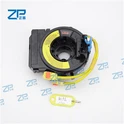
The main function of a clock spring (also called a spiral cable or rotary connector) in a car is to ensure that the electronic components on the steering wheel, such as the airbag and horn switch, can maintain a stable electrical signal connection with the main wiring harness of the car when the driver turns the steering wheel.
Specifically, the functions of the clock spring include:
Electrical signal transmission: The clock spring contains flexible flat cables that can remain flexible when the steering wheel turns, while ensuring stable transmission of electrical signals between the electrical components on the steering wheel (such as airbag modules, horns, etc.) and the vehicle's electrical system
Electrical connection maintenance: Regardless of how the steering wheel turns, the clock spring ensures that the electrical connection between the electrical components on the steering wheel and the vehicle's electrical system is not interrupted. This is essential for the normal operation of critical safety systems such as airbags.
Avoid line entanglement: Traditional fixed lines are prone to entanglement when the steering wheel turns, resulting in interruption or damage to the electrical connection. The design of the clock spring solves this problem, allowing the line to flexibly expand and contract as the steering wheel turns, avoiding line entanglement and damage.
Safety assurance: Since the clock spring plays a key role in the airbag system, its normal operation is essential to ensure that the airbag can be properly deployed and protect the safety of the occupants during a vehicle collision.