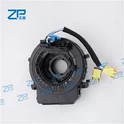
A crucial part of selecting between slip rings and clock springs involves understanding their inherent design and structural differences. While both components are central to maintaining electrical continuity in rotating systems, their mechanical structures drastically differ due to varying design principles and use-case scenarios.
Slip rings are typically circular in design and consist of one or more rings made of conductive materials such as copper or other alloys. These rings are fixed to a rotating shaft, and brushes that slide along the surface of the rings maintain the electrical contact. This assembly allows signals or power to be transferred from a stationary structure to the rotating shaft. Material selection in slip rings often leans towards those that can endure friction and wear, offering high conductivity and durability.
On the other hand, clock springs, feature a spiraling ribbon-like cable, coil, and uncoil based on the rotational motion in a system. The base of the clock spring is usually affixed to a stationary object, while the other end attaches to the rotating component. While the spiral design allows seamless rotational motion, it also mandates that material selection be flexible and resilient, capable of withstanding frequent winding and unwinding actions without compromising their electrical conductivity.
Beyond structural considerations, the discussion on design differences extends to the rotational range, the number of circuits, and the variety of signals each component can accommodate. A critical aspect to note here is how the slip ring's continuous circular design enables unrestricted 360-degree rotation, while a clock spring's design allows for rotation only up to a certain limit based on its coil's length.
In terms of circuits and signals, both slip rings and clock springs can accommodate multiple circuits to transfer a wide array of signals. This includes data, power, video, and more, depending on the application requirements. Here, the differences lie in factors like the data transmission rate, capacity, and packaging - each tailored to the specific design of the component.
In scrutinizing these design and structural differences, users can gain a deeper understanding of how slip rings and clock springs work. With such insights, they can more confidently assess the compatibility of these components with their particular system needs, ensuring optimal performance and reliability.