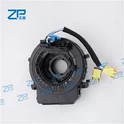
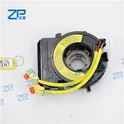
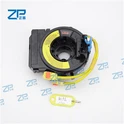
Clock Spring, a core component of automotive airbag systems, is critical to vehicle safety. Environmental factors such as temperature, humidity, vibration, dust, and installation stress directly or indirectly impact its electrical stability, mechanical longevity, and functional reliability. Below is a detailed analysis of these effects:
I. Impact of Temperature Environment
1. High Temperature Conditions
Accelerated Material Degradation:
Clock springs' plastic housings, insulation layers, and cable sheaths-predominantly made of polymer materials-tend to soften, become brittle, or deform under prolonged high temperatures (e.g., near the engine bay or during summer heat). This can lead to poor cable contact or housing jamming.
Case: Vehicles in high-temperature regions exhibit higher clock spring failure rates, particularly due to solder joint fractures from repeated thermal expansion/contraction stress.
Electrical Resistance Shifts:
Copper cables experience increased resistance at high temperatures, potentially attenuating signal transmission (e.g., insufficient airbag trigger current) and triggering system fault alerts.
2. Low Temperature Conditions
Material Hardening and Brittleness:
Low temperatures reduce the elasticity of plastic components and cable sheaths, making them prone to cracking or breaking during steering due to rigid friction-especially in northern regions with frequent winter use.
Contact Integrity Risks:
Metal terminals may contract at low temperatures, increasing contact gaps or causing short circuits due to frozen surface condensation.
II. Influence of Humidity and Corrosive Environments
1. High Humidity Environments
Electrical Short-Circuit Risks:
Condensation inside the clock spring-common during vehicle wading or air conditioning use-can degrade cable insulation and corrode terminals, leading to airbag circuit shorts or breaks.
Metal Corrosion:
Prolonged exposure to moisture oxidizes metal components (e.g., solder joints, terminals), increasing contact resistance and potentially disabling the horn or delaying airbag signals.
2. Salt Spray or Acidic Environments
In coastal or industrial areas, corrosive agents like salt spray and sulfides accelerate metal degradation, weakening the clock spring's mechanical strength and conductivity, and even causing internal wire breaks.
III. Effects of Vibration and Mechanical Stress
1. Prolonged Vibration
Continuous vehicle vibration (e.g., on rough terrain or unpaved roads) causes friction between internal cables and the housing, accelerating insulation wear and potentially loosening cables or detaching solder joints.

Typical Scenario: Off-road vehicles or those frequently driven on potholed roads have higher clock spring failure rates than urban commuters.
2. Installation Stress and Steering Angle
Initial Misalignment:
Failing to reset the clock spring to its "zero point" (neutral position) during installation can overwind or overstretch cables, leading to stress-induced fractures over time.
Extreme Steering Manuevers:
Repeated full-lock steering (e.g., during parking) subjects the clock spring to continuous stress at extreme angles, accelerating spiral cable fatigue and potentially exceeding its design rotation range (typically ±360°–±540°), causing permanent damage.
IV. Impact of Dust and Contaminants
1. Dust Infiltration
Dust and debris entering the clock spring can accumulate on the cable reel or shaft, increasing rotational resistance, causing steering 卡顿 (stiffness) or noise, and abrading cable insulation.
Common Scenarios: Vehicles operating in dusty environments (e.g., mining sites, construction zones) require more frequent clock spring cleaning or replacement.
2. Oil Contamination
Lubricant leaks or external oil ingress can soften cable insulation or form oily residues on terminals, compromising electrical connectivity.
V. Electromagnetic Environment Effects
Electromagnetic interference (EMI) from vehicle systems (e.g., generators, ignition coils) can disrupt airbag signals via the clock spring's cables. High-quality clock springs use shielded designs (e.g., metal-foil-wrapped cables) to mitigate EMI. Damaged shielding may cause false triggers or delayed deployments.
VI. Mitigation Strategies and Design Optimizations
To address these environmental challenges, clock spring design and maintenance prioritize:
Material Upgrades:
High-temperature-resistant materials (e.g., silicone rubber insulation) and cold-resistant polymers (e.g., polyurethane) enhance durability.
Gold or nickel plating on metal parts reduces corrosion risks.
Structural Enhancements:
Optimized spiral cable winding and elasticity expand the rotation range (e.g., ±600°) to minimize stress concentrations.
Dustproof seals and waterproof coatings prevent contaminant ingress.
Installation and Maintenance:
Strict "zero-point" reset during installation ensures proper stress distribution.
Regular checks for smooth rotation, debris cleaning, and shortened maintenance cycles for high-dust environments.