


In the world of automotive parts, part numbers play a crucial role in identifying and sourcing the right components. One such part number that has caught my attention is 84306 - 52020. As a supplier of this particular part, I've delved deep into its significance and how it relates to other arithmetic operations and the broader automotive parts landscape.
Understanding the Part Number
First and foremost, let's break down the part number 84306 - 52020. While the exact meaning of these numbers is often proprietary to the manufacturer, they typically encode information about the part's design, application, and compatibility. The subtraction sign in the middle might seem like a simple arithmetic operation, but it's more of a separator in this context. However, we can still draw parallels between this part number and other arithmetic operations in several ways.
Addition and Complementary Parts
In the automotive industry, parts often work together in a complementary manner. Just as addition combines two or more numbers to form a larger sum, different parts come together to create a functional system. For example, the 84306 - 52020 part might be part of a larger assembly that includes other components. These complementary parts can be thought of as numbers that, when added to the 84306 - 52020, create a complete and functional unit.
Let's say the 84306 - 52020 is a clock spring spiral cable sub - assy. It might need to be paired with other electrical connectors, sensors, or mechanical components to work properly. Each of these additional parts can be seen as an "addend" in the equation of creating a fully operational automotive system. For instance, if we consider the Clock Spring Spiral Cable Sub - Assy Cinta Airbag 84306 - 33080 for Toyota CAMRY 2.4 2004 -, SIENNA 3.3 2003 -, 3.5 2006 -, it might be used in a similar system and could be combined with the 84306 - 52020 in a different configuration to serve a specific automotive application.
Multiplication and Quantity
Multiplication is often used to represent the concept of quantity. In the business of supplying automotive parts, we deal with quantities on a regular basis. If a customer orders multiple units of the 84306 - 52020 part, we can use multiplication to calculate the total number of parts and the associated cost. For example, if a customer orders 10 units of the 84306 - 52020 at a price of $x per unit, the total cost would be 10 * $x.
Moreover, in the manufacturing process, multiplication can also be related to the production scale. If a manufacturer produces the 84306 - 52020 part in batches, they might multiply the number of parts in each batch by the number of batches to determine the total production volume. This is crucial for inventory management and meeting market demand.
Division and Pricing and Distribution
Division comes into play when we talk about pricing and distribution. When calculating the unit price of the 84306 - 52020 part, we divide the total cost of a batch of parts by the number of units in that batch. This helps us set a fair and competitive price for our customers.
In terms of distribution, division can be used to allocate parts among different regions or customers. For example, if we have a total of 1000 units of the 84306 - 52020 part and we want to distribute them equally among 5 different distributors, we would divide 1000 by 5 to determine that each distributor should receive 200 units.
Comparison with Similar Part Numbers
Let's compare the 84306 - 52020 with other similar part numbers in the market. For example, the Clock Spring Spiral Cable Sub - Assy Cinta Airbag 84306 - 06180 for Toyota RAV4 and Levin 2014 - 2018 and the Clock Spring Spiral Cable Sub - Assy Cinta Airbag 84308 - 02150 for Toyota Levin 2016 - 2018. These part numbers share some similarities in the first few digits, which might indicate that they belong to the same general category of parts (clock spring spiral cables in this case).
However, the differences in the later digits suggest variations in design, compatibility, or application. Just like in arithmetic, where small differences in numbers can lead to significant differences in the result, these small variations in part numbers can mean that the parts are not interchangeable and are designed for specific vehicle models and years.
The Role of Arithmetic in Inventory Management
Arithmetic operations are also essential for inventory management. We need to keep track of the incoming and outgoing stock of the 84306 - 52020 part. Addition is used to record new arrivals of parts into the inventory, while subtraction is used to account for parts that are sold or used in production.

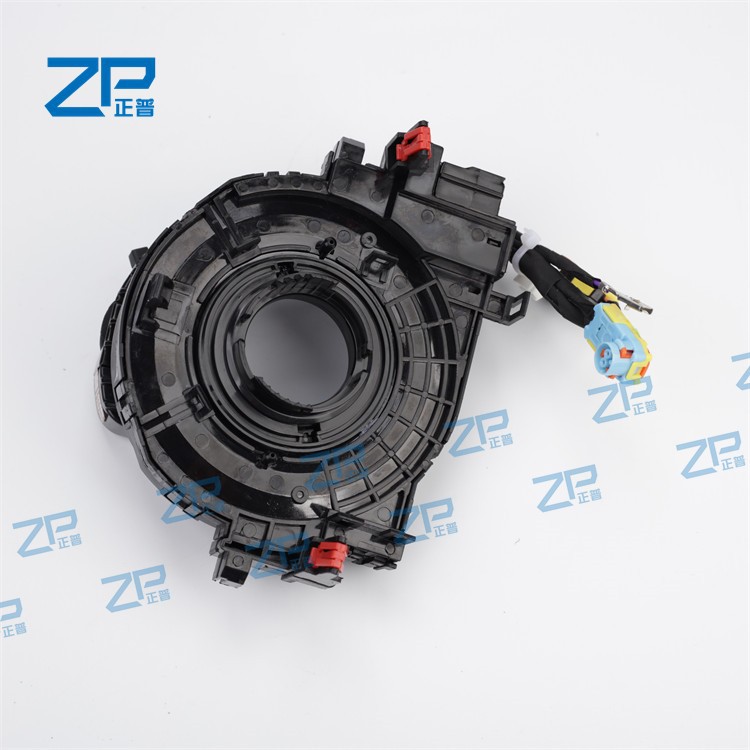
For example, if we start with an initial inventory of 500 units of the 84306 - 52020 part and receive a new shipment of 200 units, we add 200 to 500 to get a new inventory level of 700 units. If a customer then orders 150 units, we subtract 150 from 700 to update the inventory level to 550 units.
Conclusion and Call to Action
In conclusion, the part number 84306 - 52020 is not just a random string of numbers and a subtraction sign. It has deep connections with various arithmetic operations that are fundamental to the automotive parts business. From understanding complementary parts through addition, managing quantities with multiplication, setting prices and distributing parts using division, to keeping track of inventory with addition and subtraction, arithmetic plays a vital role in every aspect of our work as a supplier.
If you are in the market for high - quality automotive parts, including the 84306 - 52020, we invite you to reach out for a procurement discussion. We are committed to providing the best products and services to meet your automotive parts needs.
References
- Automotive Parts Manufacturing Handbook
- Industry reports on automotive parts supply and distribution


