


As a dedicated supplier of clock springs for Toyota vehicles, I've delved deep into the intricacies of these essential components. One question that often arises in the automotive industry is whether there are differences in clock springs for Toyota hybrids and non - hybrids. In this blog, I'll explore this topic in detail, drawing on my extensive experience and knowledge.
Understanding Clock Springs
Before we dive into the differences between clock springs for hybrids and non - hybrids, it's important to understand what a clock spring is and what it does. A clock spring, also known as a spiral cable, is a critical component in modern vehicles. It's located inside the steering column and serves as a flexible electrical connection between the steering wheel and the vehicle's electrical system.
The clock spring allows for the rotation of the steering wheel while maintaining a continuous electrical connection. This is essential for functions such as the horn, airbag, cruise control buttons, and other steering - wheel - mounted controls. Without a properly functioning clock spring, these features would not work correctly, and in the case of the airbag, it could pose a significant safety risk.
Similarities Between Clock Springs for Hybrids and Non - Hybrids
Many aspects of clock springs for Toyota hybrids and non - hybrids are quite similar. Firstly, the basic design concept is the same. Both types of clock springs are spiral - shaped cables that are wound inside a housing. They are designed to flex and unwind as the steering wheel turns, providing a reliable electrical connection throughout the steering wheel's range of motion.
In terms of materials, both hybrid and non - hybrid clock springs are typically made from high - quality copper or other conductive materials to ensure good electrical conductivity. The insulation materials used to protect the cables are also similar, as they need to withstand the harsh environment inside the steering column, including temperature variations, vibrations, and mechanical stress.
Functionally, both types of clock springs are responsible for transmitting electrical signals between the steering wheel and the vehicle's electrical system. Whether it's a non - hybrid Toyota Corolla or a hybrid Toyota Prius, the clock spring enables the operation of the horn, airbag, and other steering - wheel - mounted controls.
Differences Between Clock Springs for Hybrids and Non - Hybrids
Despite the similarities, there are several key differences between clock springs for Toyota hybrids and non - hybrids.
Electrical Requirements
One of the most significant differences is the electrical requirements. Hybrid vehicles often have more complex electrical systems compared to non - hybrid vehicles. They have additional components such as electric motors, battery management systems, and regenerative braking systems. As a result, the clock springs in hybrid vehicles may need to handle a higher volume of electrical signals and power.
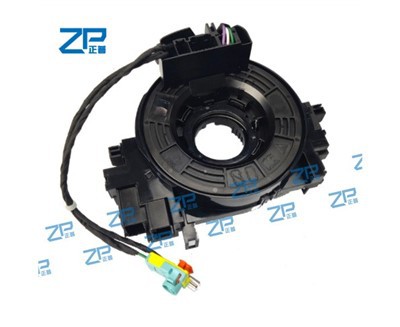

For example, in a non - hybrid Toyota Camry, the clock spring mainly needs to transmit signals for the horn, airbag, and basic steering - wheel controls. However, in a Toyota Camry Hybrid, the clock spring may also need to transmit signals related to the hybrid system, such as the display of battery charge status or the operation of the electric - assist steering. This means that the clock spring for the hybrid version may have more circuits or a higher current - carrying capacity.
Integration with Hybrid Systems
Clock springs in hybrid vehicles are also more likely to be integrated with the vehicle's hybrid systems. They may need to communicate with the hybrid control unit to ensure proper operation of the hybrid functions. For instance, if the steering wheel controls are used to adjust the driving mode in a hybrid vehicle (e.g., switching between electric - only mode and hybrid mode), the clock spring needs to accurately transmit the corresponding signals to the hybrid control unit.
In contrast, non - hybrid vehicles do not have these hybrid - specific functions, so their clock springs do not need to be integrated with such complex systems.
Durability and Reliability
Hybrid vehicles often have different operating characteristics compared to non - hybrid vehicles. For example, hybrid vehicles may have more frequent starts and stops, especially in urban driving conditions, due to the use of the electric motor. This can put additional stress on the clock spring.
To ensure long - term reliability, clock springs for hybrid vehicles may be designed with enhanced durability features. They may be made from more robust materials or have a more precise manufacturing process to withstand the increased mechanical and electrical stress.
Examples of Specific Clock Springs
To illustrate these differences, let's take a look at some specific clock springs for Toyota vehicles.
For non - hybrid Toyota models, we offer the Clock Spring Spiral Cable Sub - Assy Cinta Airbag 84306 - 06180 for Toyota RAV4 and Levin 2014 - 2018. This clock spring is designed to meet the electrical and mechanical requirements of these non - hybrid vehicles. It provides a reliable connection for the horn, airbag, and other steering - wheel - mounted controls.
For the non - hybrid Toyota Camry, we have the Clock Spring Spiral Cable Sub - Assy Cinta Airbag 84308 - 06060 for TOYOTA CAMRY 2015 - . This clock spring is engineered to ensure proper operation of the standard features in the Camry, without the additional complexity of hybrid - specific functions.
On the other hand, for the Toyota Camry Hybrid 2011 - 2014, we offer the Clock Spring Spiral Cable Sub - Assy Cinta Airbag 84306 - 09020 for Toyota Camry Hybrid 2011 - 2014. This clock spring is designed to handle the unique electrical and functional requirements of the hybrid version of the Camry, including integration with the hybrid system.
Importance of Choosing the Right Clock Spring
Choosing the right clock spring for your Toyota vehicle is crucial. Using an incorrect clock spring can lead to a variety of problems, including malfunctioning of the steering - wheel controls, airbag failure, and electrical issues.
For hybrid vehicles, using a non - hybrid clock spring may not be able to handle the additional electrical requirements and integration with the hybrid system. This can result in poor performance of the hybrid functions and potential safety risks.
Conversely, using a hybrid - specific clock spring in a non - hybrid vehicle may be unnecessary and could potentially be more expensive. Therefore, it's essential to ensure that you select the appropriate clock spring based on whether your Toyota is a hybrid or non - hybrid model.
Conclusion
In conclusion, while there are similarities between clock springs for Toyota hybrids and non - hybrids, there are also significant differences. These differences stem from the unique electrical requirements, integration with hybrid systems, and durability needs of hybrid vehicles.
As a supplier of clock springs for Toyota vehicles, I understand the importance of providing high - quality, vehicle - specific components. Whether you own a hybrid or non - hybrid Toyota, I can offer the right clock spring to ensure the proper operation of your vehicle's steering - wheel controls and safety features.
If you're in the market for a clock spring for your Toyota, I encourage you to reach out for a detailed discussion about your specific needs. I'm here to help you make an informed decision and provide you with the best - fitting product for your vehicle.
References
- Automotive Engineering Handbook, various editions
- Toyota Technical Documentation for Hybrid and Non - Hybrid Models


